The Government’s 2026 Climate Statement
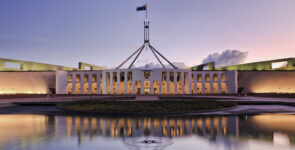
Strengthened efforts to transition to cheap, clean energy, as contained in the Government’s Annual Climate Change Statement, are the best chance to bolster Australia’s economic resilience.
The Government’s statement shows Australia’s 2030 emissions target is within reach, but highlights the headwinds that renewable energy projects face in reaching final investment decision.
It also recognises the need to ensure existing policy levers, including the Safeguard Mechanism, deliver their share of emissions reduction.
Australia’s energy transition
IGCC Executive Director, Policy, Frankie Muskovic said it has never been clearer that Australia’s energy security and economic resilience rely on the transition to clean, firmed renewable energy.
“The current fuel crisis should be the last fuel crisis we ever face in Australia,” Ms Muskovic said.
“The road to a resilient economy is paved with firmed renewables and switching more end uses of energy to electricity rather than relying on increasingly unreliable, imported fossil fuels.
“Our ability to build new competitive sovereign industries relies on cheap input costs, and in 2026 that means firmed renewable energy. We need a laser-like focus to ensure the renewables pipeline gets built and provides the foundation for new economic opportunities, including data centres and green exports,” she said.
Safeguard Mechanism review
IGCC welcomes the Climate Change Authority (CCA)’s recommendation for the Safeguard Mechanism 2031–2035 emissions budget to align with a 70% economy-wide emissions reduction, consistent with IGCC’s analysis and recommendations released in August.
“Our research has found the present settings of the Safeguard Mechanism will not drive significant on-site abatement and overreliance on offsets will worsen.
“In addition to the CCA’s constructive recommendations, we would like to see more focus on better-tailored finance to drive more on-site abatement, especially through existing sources like the Net Zero Fund in the NRF.”
IGCC also urges the Government to use the current review of the Safeguard Mechanism to provide more certainty for investors on the closure dates of coal power stations.
“It is increasingly clear that coal closure delays have undermined the business case for new renewables, delaying their deployment and leading state governments to further extend the life of ageing coal plants.
“Investors see an increasingly strong rationale for imposing a Safeguard liability on coal generators from their stated closure date to provide more certainty for the market.”
Fossil methane emissions
IGCC welcomes the Government’s in-principle agreement to recommendations from the CCA relating to methane emissions from fossil fuel activities.
“Substantial methane reductions will deliver outsized benefits, because methane does so much near-term damage to the atmosphere,” Ms Muskovic said.
“We can do the lion’s share of methane action this decade, and that will help Australia’s exports compete long into the future.”
IGCC also commends the Government’s in-principle commitment to implement recommendations that will improve emissions measurement and transparency on superpollutants including methane.
“Investors rely on accurate emissions data to weigh the transition risks and supply chain risks of companies and facilities in their portfolios, and to assess corresponding risks to asset and acquisition valuation,” said Ms Muskovic.
“Our members have been clear that this reliance is compromised if methane emissions reports omit information on the near-term impacts to climate.”
IGCC therefore underscores calls to display methane using both simple near-term and long-term conversion factors.
COP31 and Australia’s global leadership
IGCC acknowledges Australia’s efforts as President of Negotiations at COP31 in Türkiye.
While consensus on a cover decision was ultimately not reached, Australia successfully advanced practical measures, such as the Global Electrification Pledge, which secured the support of more than 90 countries, and the Australia–Republic of Korea Memorandum of Understanding, which enhances bilateral low-carbon trade and investment opportunities.
“Australia must continue to exercise international climate leadership, both to reduce the systemic financial risks of climate change and to ensure Australia captures its share of the significant economic opportunities arising from the global transition to net zero emissions,” said Ms Muskovic.
Adaptation
IGCC welcomes the Government’s continued focus on adaptation with the publication of its Adaptation Action Agenda, building on the previously published National Adaptation Plan.
The Government’s Agenda includes some useful early steps towards an adaptation financing strategy that would stimulate private and public investment in resilience.
Investors look forward to working with the Government to develop investment blueprints that demonstrate how private capital could support priority adaptation projects.
Investors also welcome the Agenda including
- an update to the CEFC’s mandate so that it takes into account physical climate risk and adaptation co-benefits,
- practical guidance for recognising the value of adaptation and resilience investments, and
- the prospect of adaptation being included in the sustainable finance taxonomy.
“Despite the economy’s exposure to extreme weather disruption and chronic climate impacts, Australia also has the resources that could potentially protect commerce and community from the climate damage that has already occurred”, Ms Muskovic said.
“Although no country can protect itself if current high global emissions continue, a continued focus on adaptation and resilience is crucial while we switch to clean energy and cut emissions from industry.”
IGCC notes $6.8 trillion would be wiped from Australia’s economy between now and 2050 if global warming continues on its current trajectory, according to a conservative estimate from the world’s central banks, cutting thousands of dollars a year out of the pockets of Australians. The average superannuation fund would produce 18–30% lower returns to members’ retirement accounts.